
The key to guiding your process flow:
GEA FLOWVENT Shut-off valves are used for easy shut-off solutions in hygienic applications.
Function
For simple shut-off functions, there is only one seal separating the pipelines from each other. In the event of a possible seal failure, liquid can leak into the second pipeline. For this reason, shut-off valves are not suitable for separating incompatible media.
Application
Shut-off valves are ideal for use e.g. as drain valves or to shut off a bypass line. Often these valve types are also used as dosing valves.
Technical data of the standard version
| Recommended flow direction | Against the closing direction |
| Material in contact with product | AISI 316L |
| Material not in contact with product | AISI 304 |
| Seal material in contact with product | EPDM, FKM |
| Ambient temperature | 0 to 45°C |
| Air supply pressure | 6 bar (87 psi) |
| Product pressure | 5 bar (73 psi) |
| Surface in contact with product | Ra ≤ 0,8 μm |
| External housing surface | Matte |
| Control and feedback system | FLOWVENT Control top |
| Actuator type | Pneumatic actuator air / spring |
| Connection fittings | Welding end |
| Identification | Adhesive label |
| Certificates | FDA |
Downloads
Produits associés

FLOWVENT Control top
GEA's state-of-the-art control top technology means you can set-up each installed GEA FLOWVENT valve unit automatically within seconds, even without special training.

FLOWVENT Mixproof valves
State-of-the-art for your secure applications: GEA FLOWVENT Mixproof valves are used for the hygienically safe shut-off of incompatible media at pipe intersections.

FLOWVENT Double-seal valves
The easy solution for CIP feeds: GEA FLOWVENT Double-seal valves can be applied as efficient alternatives for secure separation of incompatible products within CIP systems or gas blocks.

FLOWVENT Divert valves
The master tool for all changeover functions: GEA FLOWVENT Divert valves are used for easy changeover solutions in hygienic applications.
GEA Insights
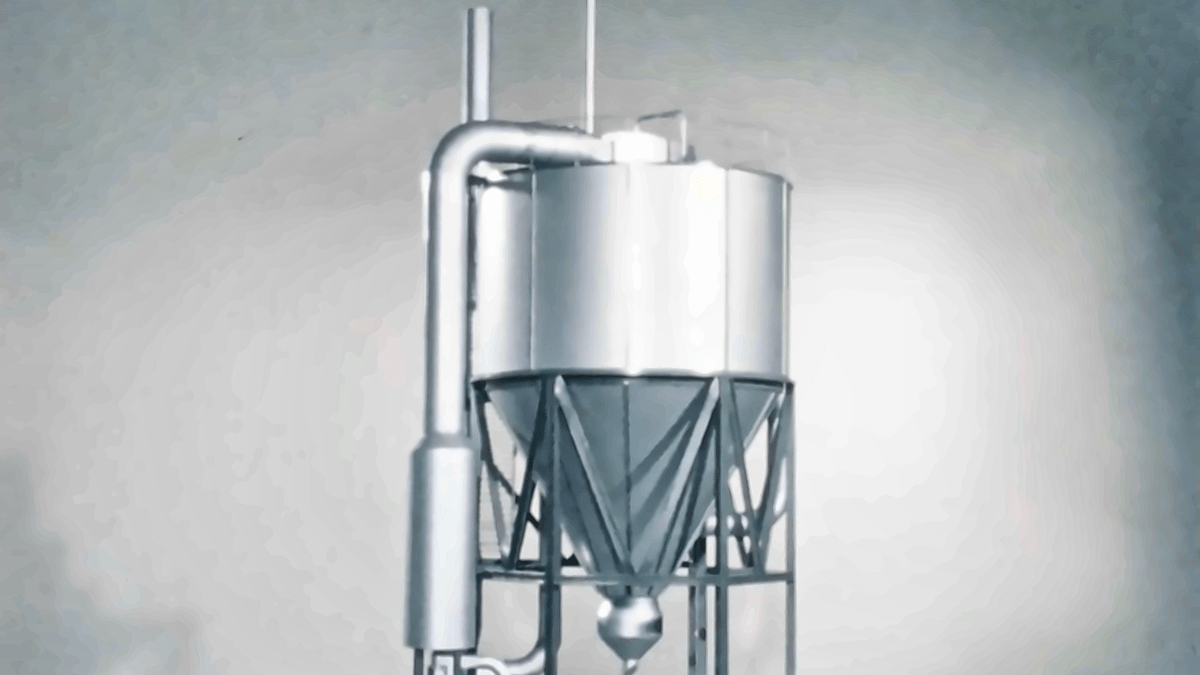
The breakthrough that changed spray drying
In 1976, NIRO engineers responded to a competitive challenge by rethinking what spray drying could do. Their idea became the multi-stage dryer MSD. Fifty years later, the same fundamental principle helps turn liquids into the powders used in essential nutrition products and important medicines around the world. Refined through decades of engineering expertise, customer insight and continuous development, MSD is a story of innovation with lasting impact.

Au-delà des machines : exploiter les gisements de performance des installations
Ce n'est pas parce que vous avez des machines efficaces que votre usine l'est. Une trajectoire d'amélioration efficace commence souvent par une analyse qui ne se limite pas aux équipements pris individuellement, et cherche à comprendre comment les processus, les systèmes énergétiques et les décisions opérationnelles s'influencent mutuellement. C'est une démarche holistique, conçue pour repérer des opportunités qui, sans cela, risqueraient de passer inaperçues.

Comment une vanne révolutionne la production des aliments et des boissons
Dans les installations agroalimentaires, les vannes sont généralement actionnées en utilisant de l'air comprimé. La technologie d'actionnement GEA Hydract® Actuation Technology, quant à elle, actionne les vannes en utilisant de l'eau, au sein d'un circuit fermé à commande numérique. Résultat, une vanne peut être maintenue en place de manière exacte et réglée par petits paliers. Cela se traduit par une consommation d'énergie en baisse et un meilleur contrôle.
