

Cost-effective EasyCon
When cost is key and improved return on investment (ROI) is of great importance, the EasyCon Filtration Unit is the right choice for concentrating solids.
GEA cross-flow filtration technology with nanofiltration or reverse osmosis spiral-wound membranes can be used to concentrate the solids content of various feedstocks.
For concentration applications, reverse osmosis membranes should be used. If a partial demineralisation is required, nanofiltration membranes are recommended. Operating at temperatures of approximately 10–15 °C, the filtration unit eliminates the risk of thermally stressing the product.
EasyCon - easy to install and operate
Frame-mounted and ready for installation, the EasyCon unit includes filtration modules with nanofiltration or reverse osmosis membranes, pumps, instruments, a clean-in-place (CIP) dosing unit and control technology for automatic and easy operation.
Operating parameters and performance data of the EasyCon
- Processing feedstocks with a TS of 5–12%, a maximum concentration of up to 25% can be achieved
- With a volumetric concentration factor (VCF) of 4.0, 1,500 l/h of water can be removed from an infeed of 2,000 l/h
- Capacities from 2,000-32,000 l/h
- Low operating temperature (approx. 10–15 °C)
EasyCon at-a-glance
- Plug & play design for fast installation and commissioning
- Compact system design for small footprint
- No assembly on site as all components are frame-mounted
- Automatic control and visualization with touchscreen for easy operation
- Processing of multiple products possible
- Spiral-wound nanofiltration or reverse osmosis membranes
- Standardized modular design to reduce investment costs and improve the return on investment
Downloads

Insights da GEA
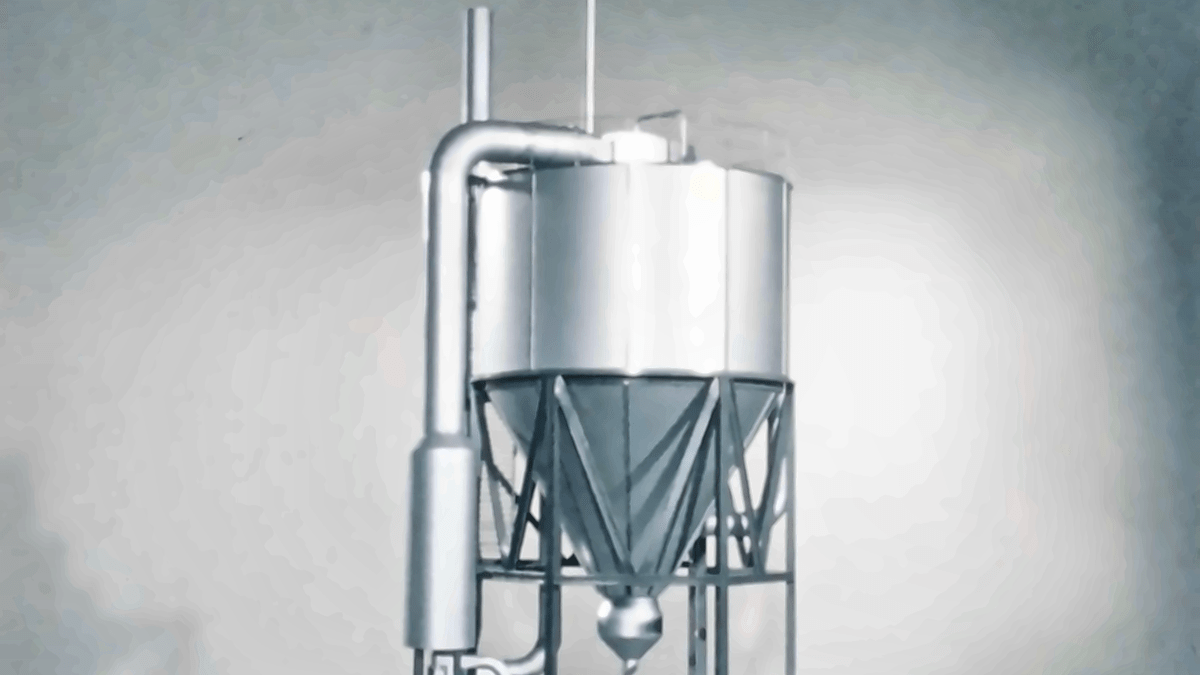
The breakthrough that changed spray drying
In 1976, NIRO engineers responded to a competitive challenge by rethinking what spray drying could do. Their idea became the multi-stage dryer MSD. Fifty years later, the same fundamental principle helps turn liquids into the powders used in essential nutrition products and important medicines around the world. Refined through decades of engineering expertise, customer insight and continuous development, MSD is a story of innovation with lasting impact.
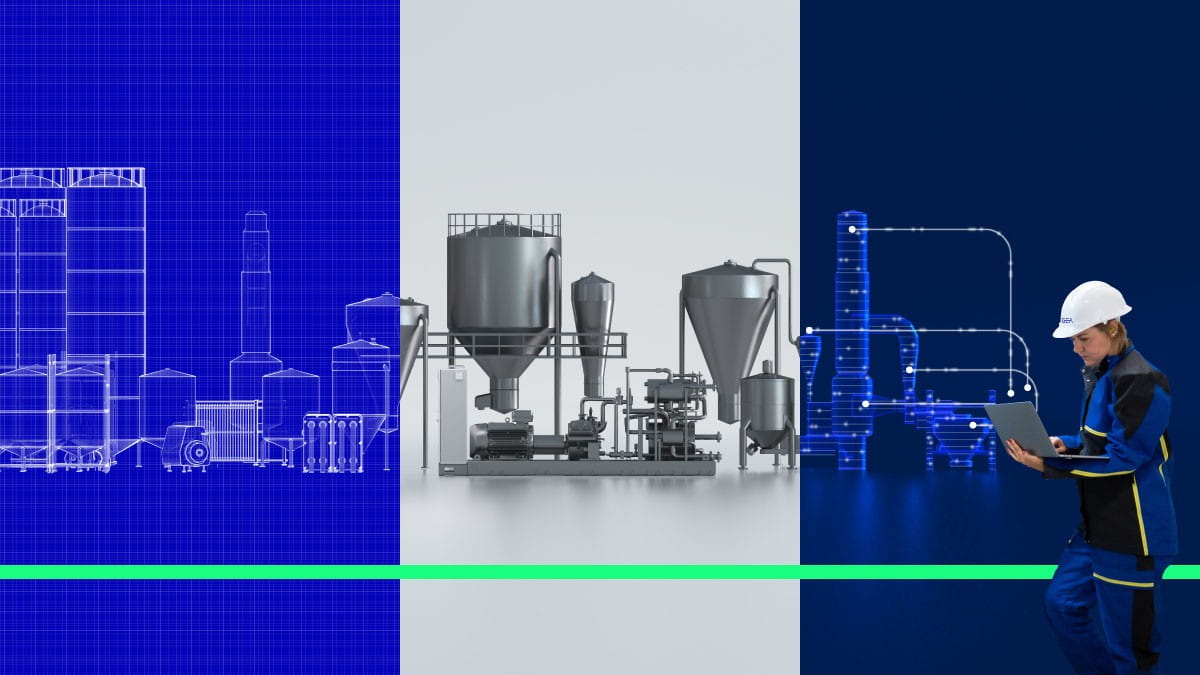
Além da máquina: como alcançar um melhor desempenho da planta
Uma máquina eficiente não significa, por si só, uma fábrica eficiente. A verdadeira melhoria geralmente começa quando se vai além dos equipamentos individuais e se compreende como os processos, os sistemas de energia e as decisões operacionais se afetam mutuamente. É uma abordagem integral concebida para identificar oportunidades que, de outra forma, poderiam passar despercebidas.
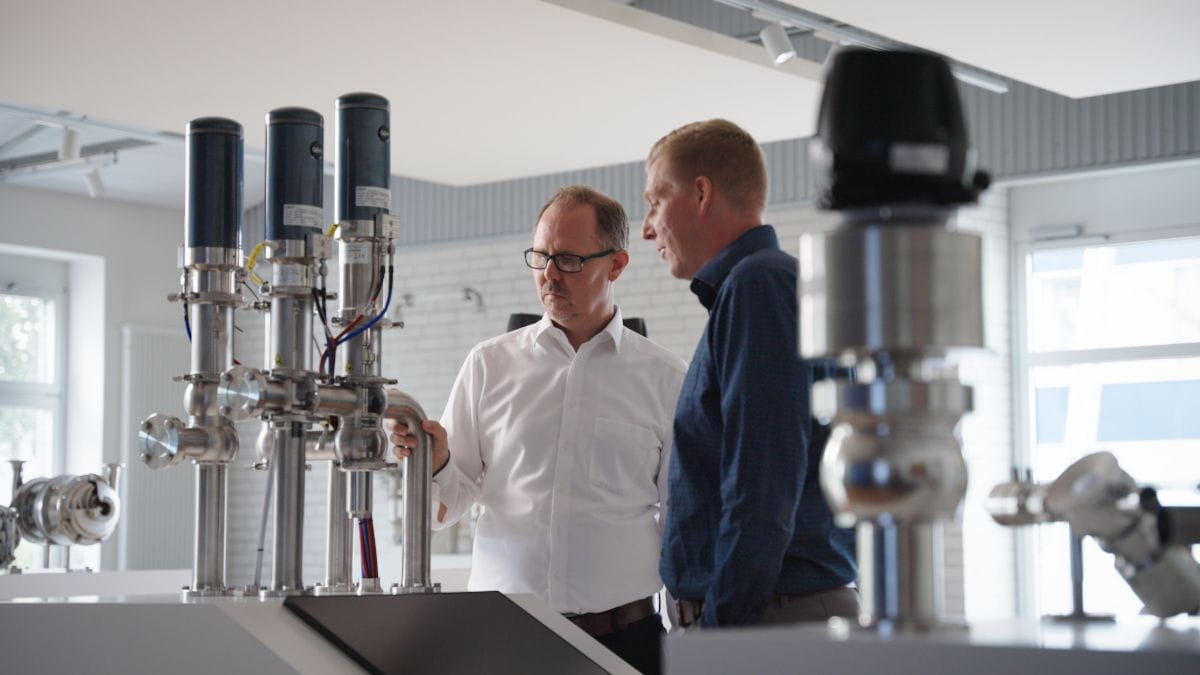
Como uma válvula revoluciona a forma como alimentos e bebidas são produzidos
Em plantas de alimentos e bebidas, as válvulas são normalmente acionadas por meio de ar comprimido. A GEA Hydract® Actuation Technology aciona as válvulas por meio de água, em um circuito fechado e controlado digitalmente. O resultado é uma válvula que pode ser mantida exatamente no lugar e ajustada em etapas precisas. Isso resulta em menor consumo de energia e maior controle.
