

GEA has developed its hot water stretching machines in partnership with the industry. For smaller producers and pilot-scale operation of up to 200 kg/h we have designed a range of all-in-one, compact hot water stretching machines with dipping arms that carry out stretching and molding in a single unit. Our continuous production systems have been developed for medium-to-industrial-scale capacities, and guarantee optimum processing and reliability. These larger-scale systems can be connected to any of the GEA range of molding units.
GEA continuous production machines feature double-walled feeding tunnels in which two counter-rotating carry out pre-stretching before the curd reaches the mixing chamber with dipping arms. Servo-motor drives with mechanical inverters guarantee accurate speed control and reliable operation, while delivery of hot water to the feeding tunnel and to the mixing vat is controlled precisely using manual micrometer valves. Adjustable piping configuration enables very fine control of the liquid level in the vat, while waste whey (and cleaning solutions) is recovered in a separate vat with strainer and centrifugal pump.
GEA machines are constructed using stainless steel AISI 304, and feature Teflon coating on augers, mixing arms and the machine body. Some models can be supplied with GEA’s innovative mechanical-chemical Vulcan treatment, which offers a permanent alternative to Teflon coating.
All GEA stretching machines include mechanical and electromechanical protection on dangerous areas to ensure operator safety. Hygienic design complies with the most stringent regulations, and facilitates efficient, effective cleaning to minimize water usage and machine down time.
Remote assistance by GEA engineers is also possible for PLC-operated stretching units.
Patented Vulcan non-stick treatment
GEA can offer its patented Vulcan non-stick treatment as a highly effective alternative to traditional Teflon-coating for metal surfaces that come into contact with product during many stages of stretched cheese production.
Vulcan represents an innovative mechanical-chemical technology that involves multiple rounds of mechanically polishing the metal surface at different pressures and angles. The process generates a non-stick surface that has a virtually limitless lifespan. This is a major benefit compared with traditional Teflon-coating, which may wear or even chip off and require periodic reapplication. Vulcan is also highly resistant to cleaning-in-place cycles.
Downloads
GEA Insights
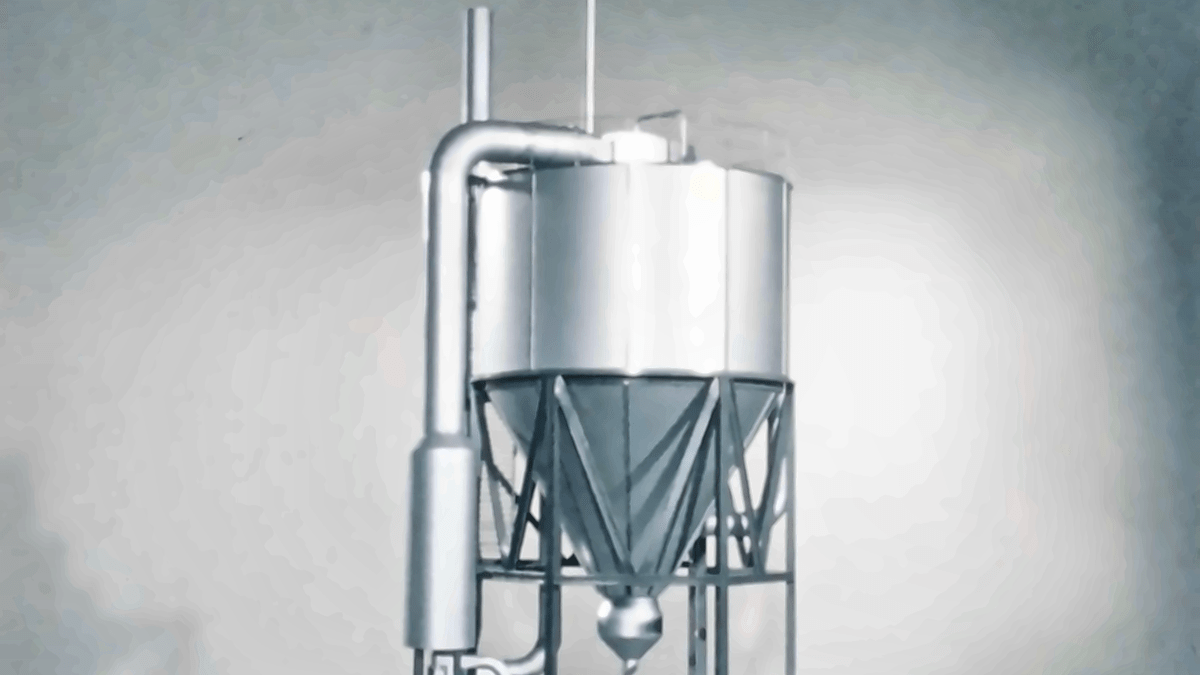
The breakthrough that changed spray drying
In 1976, NIRO engineers responded to a competitive challenge by rethinking what spray drying could do. Their idea became the multi-stage dryer MSD. Fifty years later, the same fundamental principle helps turn liquids into the powders used in essential nutrition products and important medicines around the world. Refined through decades of engineering expertise, customer insight and continuous development, MSD is a story of innovation with lasting impact.
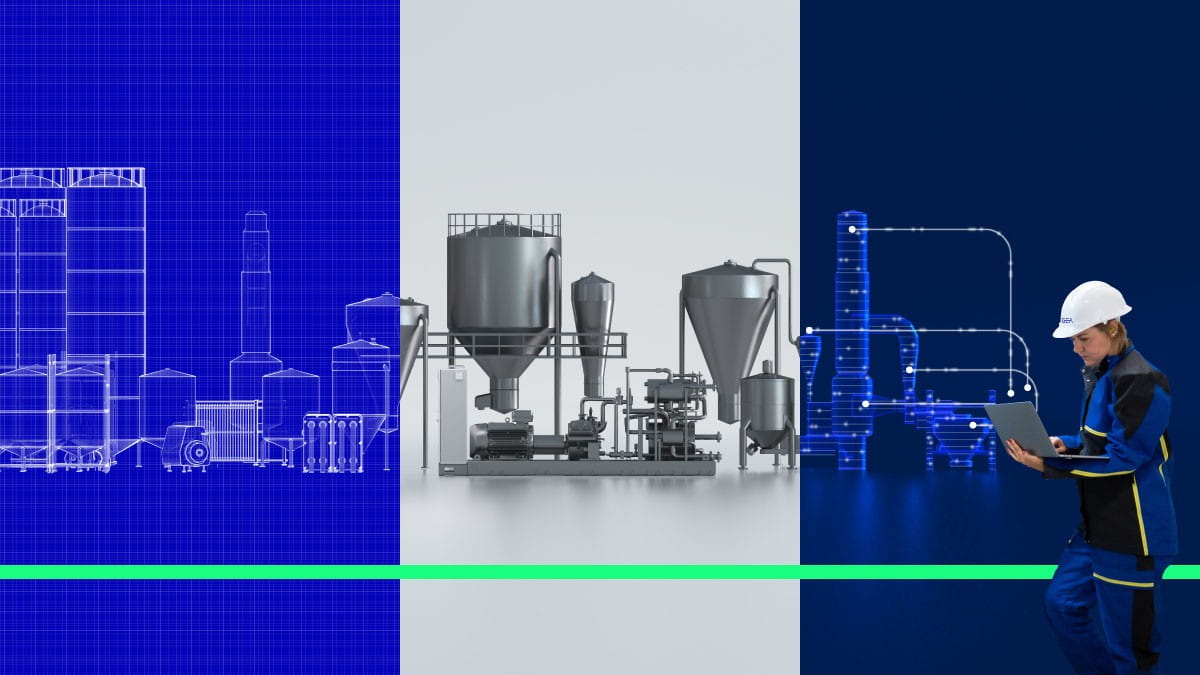
Beyond the machine: unlocking better plant performance
An efficient machine does not automatically make an efficient factory. Real improvement often starts by looking beyond individual equipment and understanding how processes, energy systems and operating decisions affect one another. It’s a holistic approach designed to uncover opportunities that might otherwise be missed.
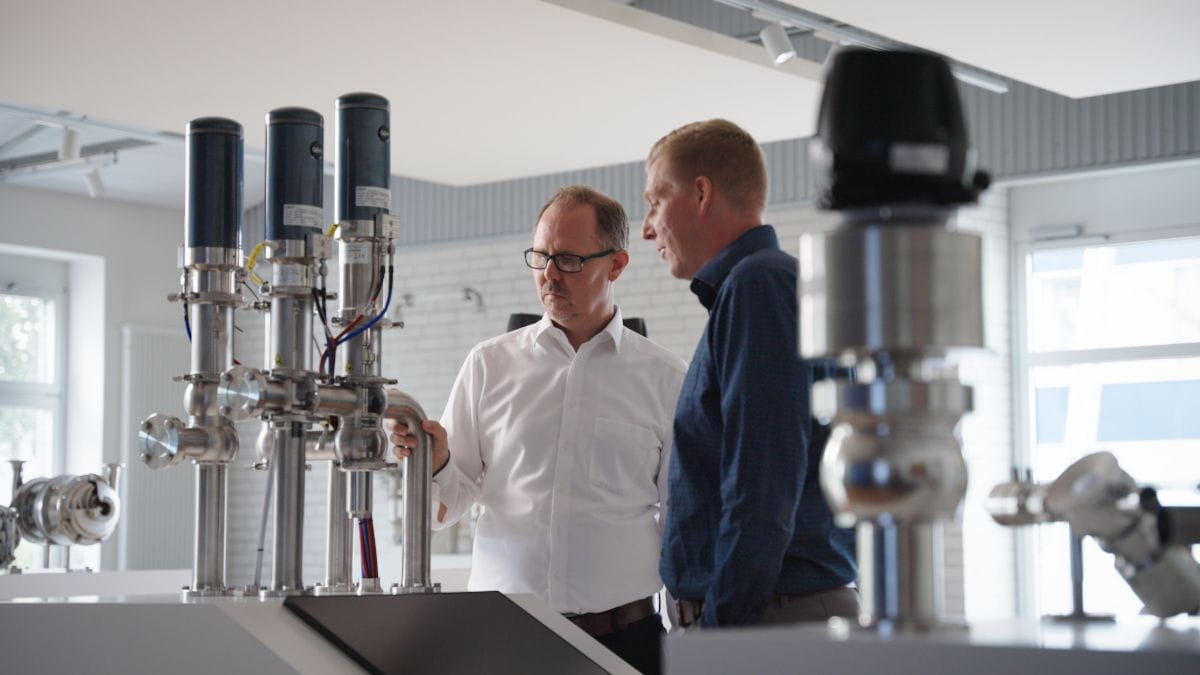
How a valve reshapes the way food and drinks are made
In food and beverage plants, valves are commonly operated using compressed air. GEA Hydract® Actuation Technology moves valves with water instead, in a closed, digitally controlled circuit. The result is a valve that can be held exactly in place and steered in fine-tuned steps. This results in lower energy use and greater control.
